
Japanese fashion, rich with a centuries-old history ranging from the traditional kimono to Tokyo's urban style, is famous for its beauty and uniqueness. How has this fashion evolved over time, and what clothing do Japanese people typically wear today?
Traditional Japanese Clothing — Wafuku
Traditional Japanese clothing, or wafuku, often consists of elaborate robes called kimonos, worn with a belt called an obi and sandals such as zōri or geta. The kimono, famous for its multi-layered cut and wide sleeves, is the most iconic traditional garment of Japan. It emerged during the Heian period (794-1193 AD) and remained the main attire for men and women for nearly 1,000 years.
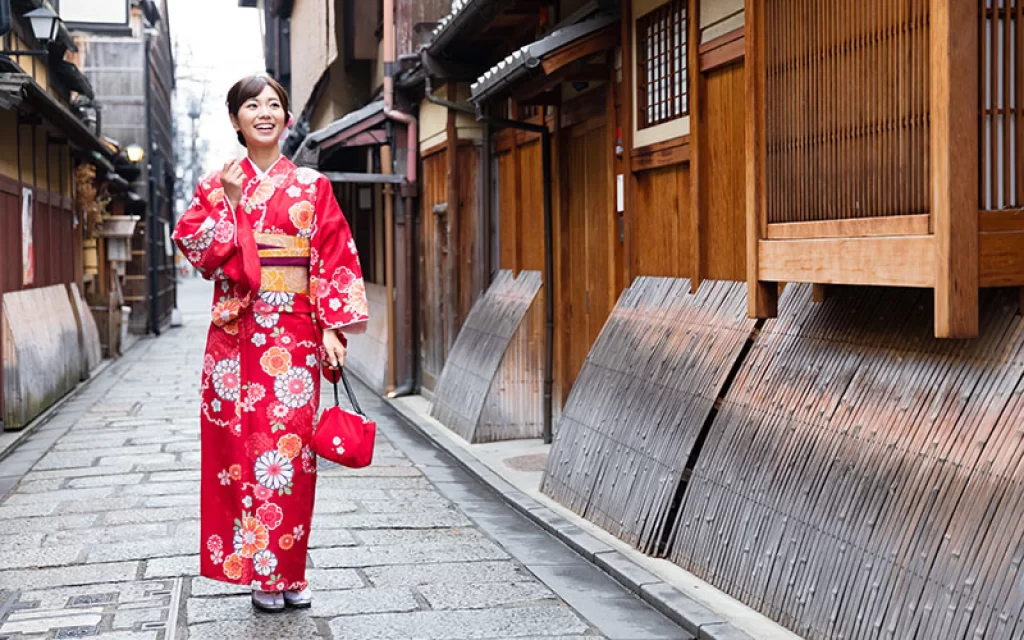
The structure of the kimono is deceptively simple. Straight seams cut from a single bolt of fabric are combined in ways that allow a single garment to fit a wide range of body sizes. The art lies in the layering, the choice of motifs, and the accessories. A fully dressed woman in formal kimono might wear up to twelve distinct pieces, each with its own rules about when and how it should be worn. The visual richness of the ensemble emerges from this discipline of accumulation.
Kimonos are also deeply tied to life events. The furisode, with its long swinging sleeves, marks young unmarried women. The tomesode, with subdued patterns below the waist, is reserved for married women at formal occasions. Mourning kimonos are predominantly black. The garments encode social information that Western dress systems tend to leave unspoken.
Difference Between Kimono and Yukata
The yukata is a casual version of the kimono, often made of lightweight cotton or polyester, ideal for warm climates with bright colors. Less formal and less expensive than the kimono, it is worn on less solemn occasions.
Yukata are most associated with summer festivals (matsuri), ryokan stays, and onsen visits. The lighter fabric makes them practical in hot, humid weather where a full silk kimono would be unbearable. Modern yukata designs range from traditional indigo-and-white patterns to contemporary prints featuring anime characters or brand logos — a flexibility that has helped them stay popular with younger Japanese consumers who might not otherwise engage with traditional dress.
The Hakama and the Obi
The hakama, wide trousers worn over the kimono for formal events, and the obi, an ornate belt tied at the back, often complete the traditional outfit. The art of tying the obi is a practice passed down from generation to generation.
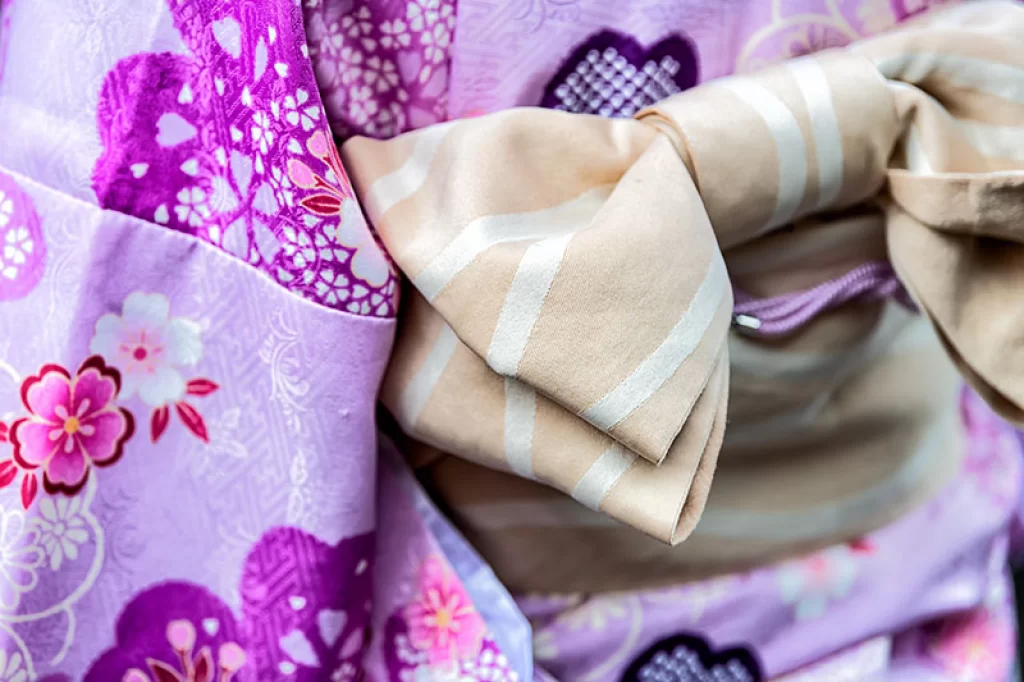
The obi is more than a belt — it is the centrepiece of the entire outfit. A single obi can cost as much as a high-end handbag, and the knots themselves have names and meanings. The "taiko" (drum) knot is the most formal and most difficult to achieve unaided. The "bunko" knot is reserved for young girls. There are regional variations, period variations, and family variations. Mastering even a few basic knots represents years of practice.
The hakama, with its seven pleats, carries its own symbolism. The pleats are said to represent virtues: benevolence, justice, honour, loyalty, and others. Aikido, kendo, and traditional archery schools still require hakama as part of the practitioner's uniform, keeping the garment in continuous use even outside purely fashion contexts.
Traditional Footwear — Zōri and Geta
Zōri, sandals similar to modern flip-flops, and geta, raised wooden sandals, are often worn with kimonos and yukatas. Tabi, split-toe socks, complete these traditional shoes.
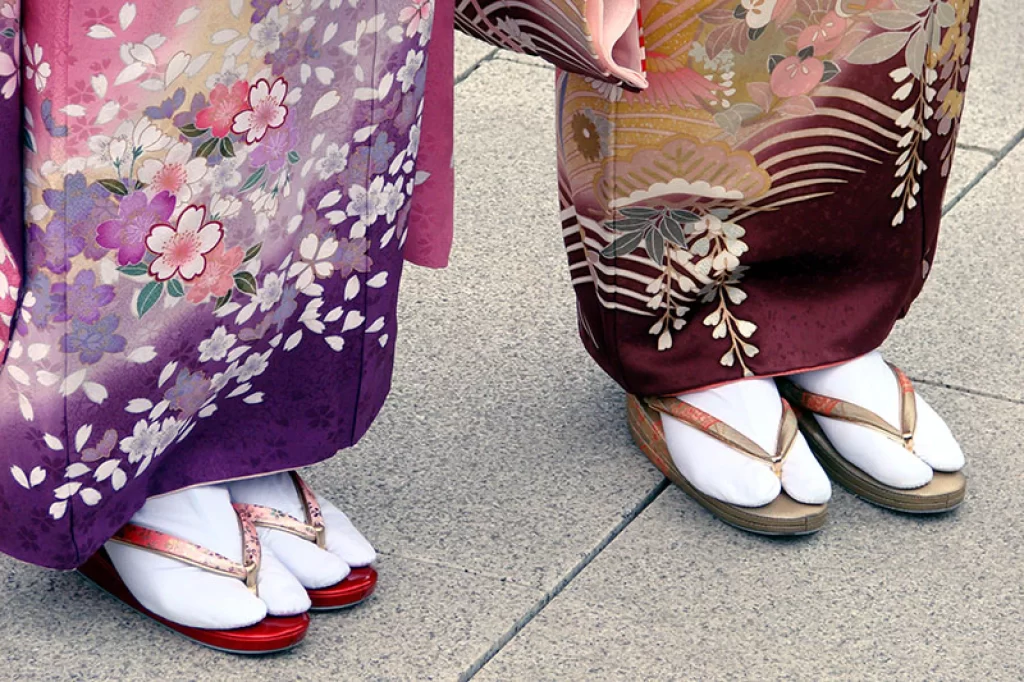
The split-toe design of tabi is not aesthetic — it accommodates the thong of traditional sandals while allowing the foot to grip as it would in a shoe. This functional detail influenced Western footwear decades later when designers began incorporating split-toe elements into contemporary fashion. The high wooden base of geta keeps the foot away from mud and water, a practical solution that also produces the characteristic clicking sound associated with traditional Japanese street life.
Western Fashion in Japan — Yōfuku
Starting in the 1850s, Western fashion, or yōfuku, gradually gained popularity in Japan, first in business circles and then more widely after World War II. Contemporary Japanese style developed in the 1980s and 1990s with the rise of "Japanese street style," known for its bold silhouettes and its blend of vintage and modern design.
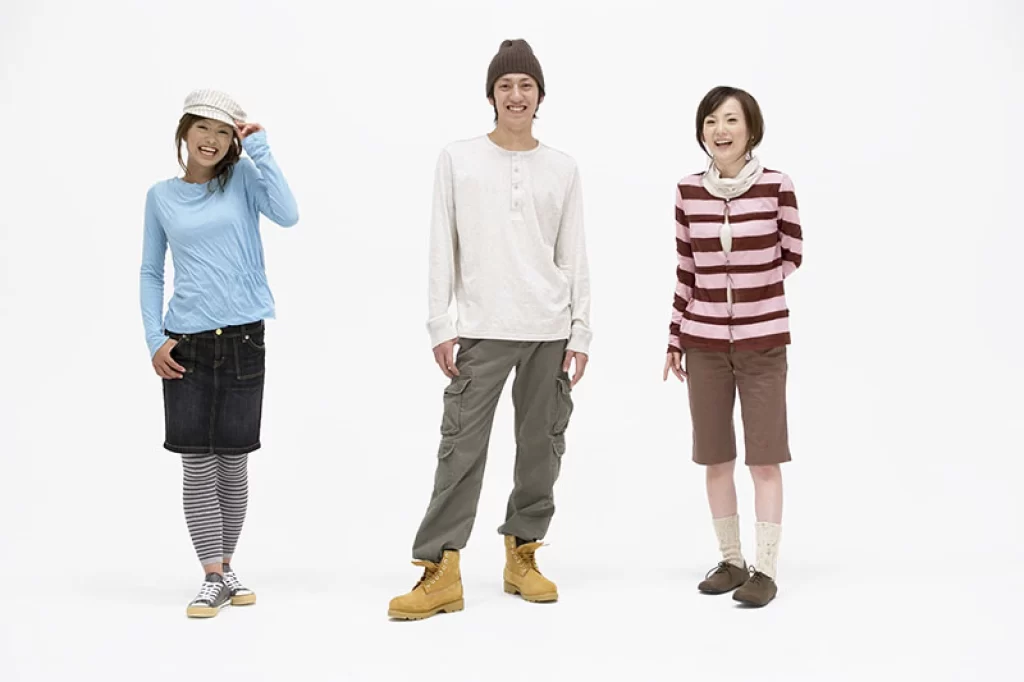
The adoption of yōfuku was not without resistance. During the Meiji Restoration, government officials who resisted Western dress risked their careers. The process of full Western dress adoption took decades and was uneven across regions and social classes. Even today, formal occasions in Japan often blend elements — a Western-style business suit with traditional accessories, for example — reflecting a hybrid sensibility that pure categorisation cannot capture.
Postwar Japan saw Western fashion embraced enthusiastically, but with distinctly Japanese twists. The result was the emergence of designers like Issey Miyake, Rei Kawakubo, and Yohji Yamamoto, who took Western silhouettes and deconstructed them in ways that have influenced global fashion ever since.
Japanese Street Style
Japanese street style stands out for its creativity and boldness, favoring loose-fitting clothing in soft colors and accessories such as stylish sneakers and fanny packs. Neighborhoods like Harajuku are famous for their bright and colorful styles, often blending Western and traditional Japanese clothing.
Harajuku, in particular, became an international reference point for fashion experimentation. The district's role as a gathering place for alternative subcultures produced styles that, while never mainstream in Japan, had outsized influence on global fashion. Designers and stylists from around the world have cited Harajuku as a formative influence, even when the specific looks remain too extreme for everyday wear elsewhere.
What makes Japanese street style distinctive is its willingness to mix registers. High fashion is combined with workwear, traditional motifs with contemporary graphics, masculine cuts with feminine accessories. The result is often surprising but rarely incoherent — the choices follow internal logics that insiders recognise even when outsiders do not.
Alternative Trends
Beyond mainstream fashion, Japan is also known for its alternative styles such as Harajuku, characterized by its bright colors and bold designs, and Lolita, which emphasizes a childlike and "cute" aesthetic. Kogal, inspired by Japanese school uniforms, is another example of popular alternative fashion.
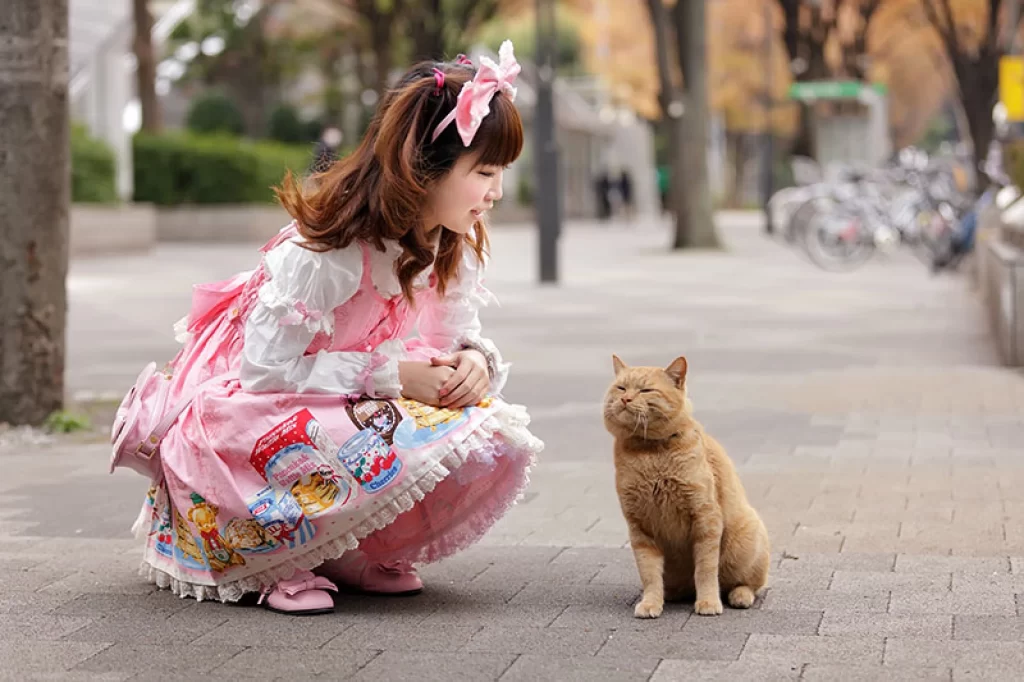
Lolita fashion, despite its name, has no connection to the novel. It is a subculture built around elaborate dresses, petticoats, and accessories inspired by Victorian and Rococo children's clothing. Within the subculture, several distinct branches exist, including "Gothic Lolita," "Sweet Lolita," and "Classic Lolita," each with its own colour palette and silhouette conventions.
Decora fashion layers large quantities of plastic accessories — hair clips, bracelets, necklaces, badges — until the wearer appears to be wearing the accessories as much as the clothing. Visual kei, with origins in 1980s rock music, combines theatrical makeup, elaborate hair, androgynous silhouettes, and influences ranging from glam rock to traditional kabuki. Each subculture is internally coherent and externally visible, making Japanese street fashion a kind of living museum of contemporary style experimentation.
The Global Influence of Japanese Fashion
Japanese fashion's global reach has only grown in the digital age. Instagram, TikTok, and online fashion publications have made Japanese street styles accessible to international audiences who previously would have needed to travel to see them firsthand. Japanese brands — from high-end labels to affordable fast-fashion players — now have global distribution networks. The aesthetic vocabulary developed in Tokyo over decades has become part of the international fashion lingua franca.
At the same time, Japanese designers continue to draw on the country's craft traditions. The integration of traditional textile techniques, natural materials, and meticulous construction with contemporary design has become one of the defining characteristics of Japanese fashion internationally. It is this combination of innovation and tradition that continues to set Japanese style apart from fashion movements elsewhere.
Conclusion
In summary, Japanese fashion, whether traditional or contemporary, continues to evolve while maintaining its distinctive elements and global influence. This unique fusion of tradition and innovation makes Japanese fashion a fascinating and dynamic field to explore. From the layered formality of the kimono to the unrestrained creativity of Harajuku street style, Japanese dress offers a window into a culture that takes clothing seriously as both art and communication.
For visitors to Japan, paying attention to what people wear is one of the most rewarding cultural observations available. The careful coordination of office attire, the playful excess of festival dress, the quiet sophistication of well-cut contemporary fashion — each tells a story about how the wearer relates to the world. Understanding even the basics of this sartorial language enriches any visit, whether to Tokyo's fashion districts, a traditional ryokan, or a matsuri in a small town.